How to Succeed in the Netherlands Phone Charging Station Market?
A cell phone charging station business provides mobile charging services through a rental model. With the widespread adoption of smartphones and the growing dependence on mobile devices, the power bank rental station industry has become an emerging business trend. Many operators want to know how to launch a phone charging station business in the Netherlands and capture this market opportunity.
1. Current Status and Growth Potential of the Netherlands Shared Power Bank Market
A power bank vending machine is a portable charging solution that offers short-term rental services. Users can rent a power bank when needed and return it at a different location, solving the problem of low battery levels while away from home. The usage scenarios and frequency of mobile phone charging stations continue to increase.
These devices are widely deployed in restaurants, entertainment venues, transportation hubs, shopping centers, and other public spaces, allowing users to rent power banks conveniently and meet their emergency charging needs anytime and anywhere.
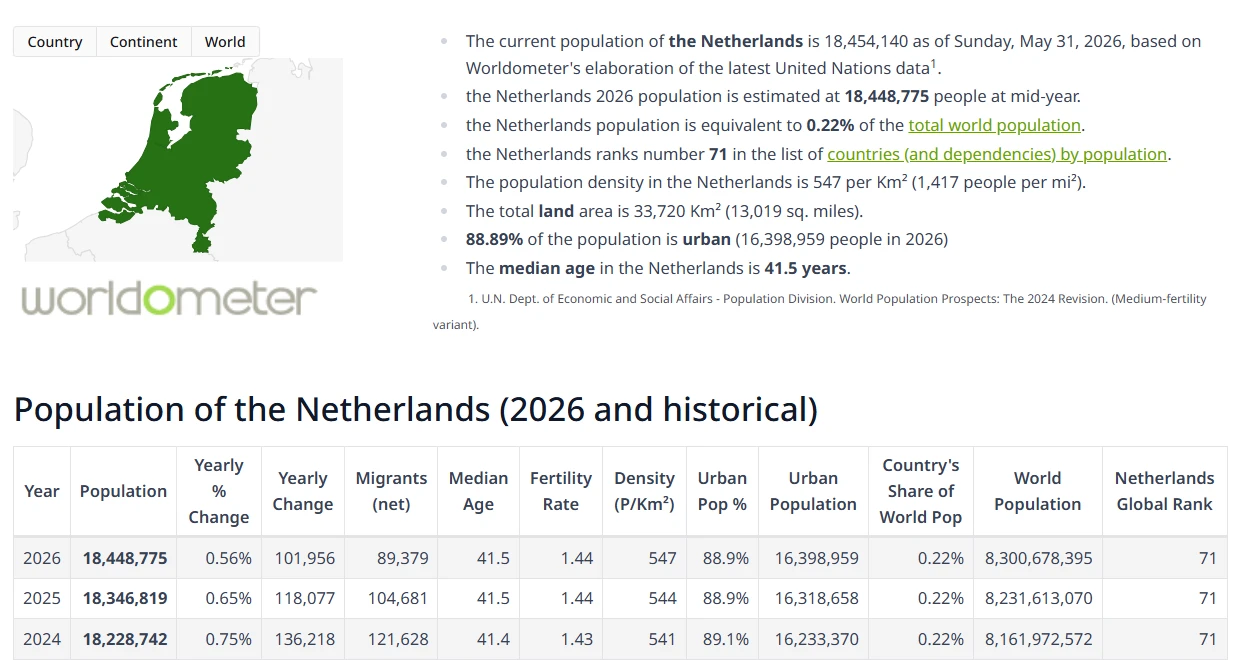
A Highly Digitalized Market with a Large Smartphone User Base:According to the latest data from Worldometer, the Netherlands is expected to have a population of approximately 18.45 million people in 2026, ranking 71st globally and remaining one of Europe's most densely populated countries. Smartphone penetration has reached approximately 93.4%.
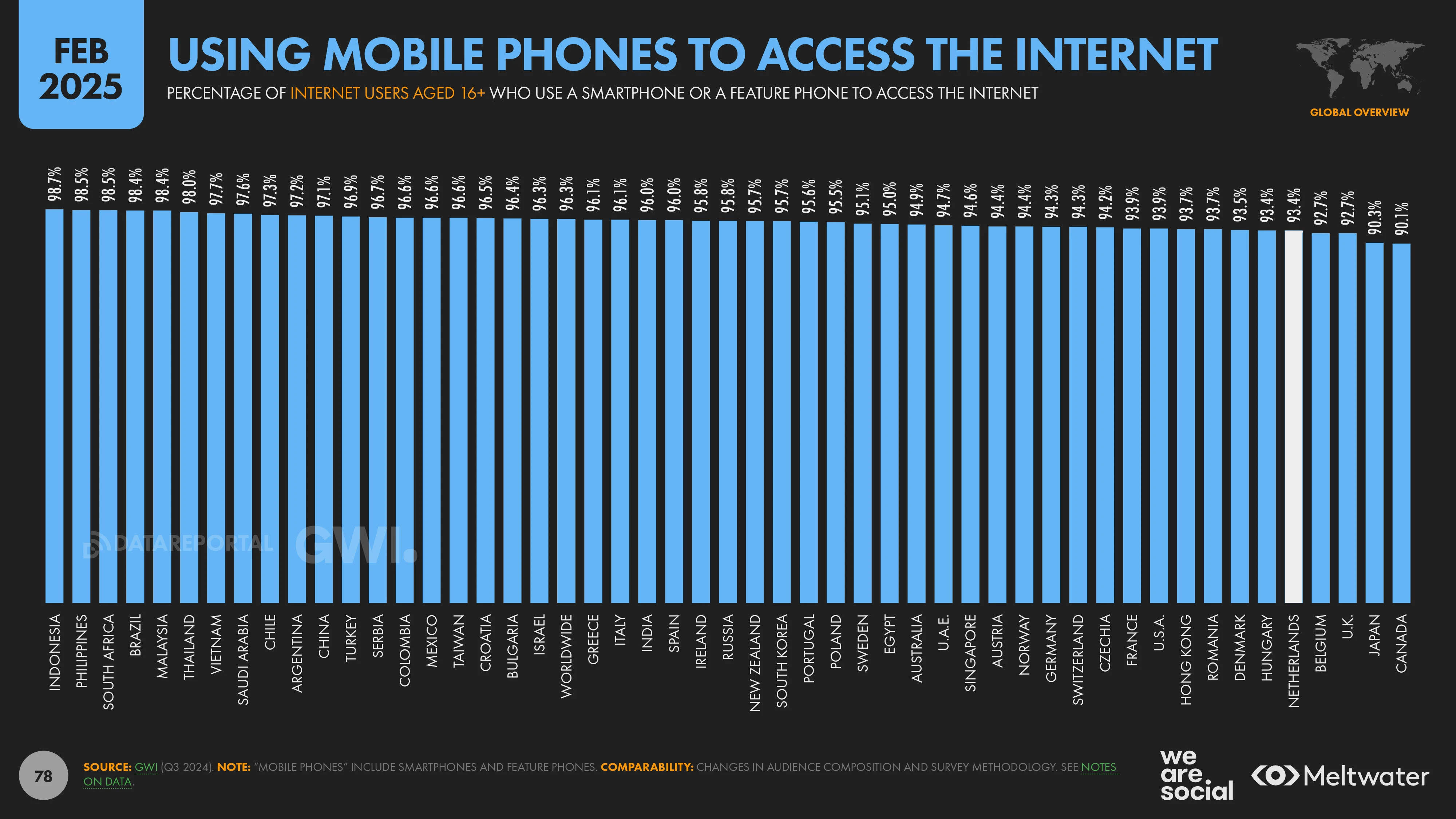
This large smartphone user base, combined with the growing amount of time people spend on their mobile devices, creates significant opportunities for the rental power bank market in the Netherlands.
The Netherlands is a highly digitalized society where people rely heavily on smartphones. According to Meltwater statistics, Dutch smartphone users aged 16 and above spend an average of 33 hours and 29 minutes per week on their devices. High-frequency usage leads to faster battery consumption.
Traditional charging methods, such as carrying bulky power banks or searching for power outlets, no longer meet users' expectations for convenience.
A power bank rental station offers a more flexible and convenient solution, allowing users to rent a power bank whenever they need one. Compared with purchasing a power bank that may sit unused most of the time, shared power banks are more cost-effective because users only pay when they need the service.
With stations available in shopping malls, restaurants, and other public locations, users can easily access charging services wherever they go.
Strong Consumer Spending and High Tourist Traffic:Public charging infrastructure coverage in the Netherlands remains relatively limited. When users need to charge their phones during daily activities or emergencies, it is often difficult to find available charging facilities. Even when charging points are available, waiting beside a charging station is inconvenient.
Power bank rental services provide a convenient and secure mobile charging solution, making them increasingly attractive to Dutch consumers.
The Netherlands is also one of the world's most popular tourist destinations. Cities such as Amsterdam and Rotterdam attract millions of international visitors every year. Tourists frequently use their smartphones for navigation, photography, social media, and information searches, leading to rapid battery depletion.
Because travelers generally prefer not to remain stationary while charging their devices, they are willing to pay a premium for convenient charging services.
High tourist traffic increases rental frequency and improves average revenue per transaction, creating a solid foundation for the rapid expansion of power bank charging station networks.
An Early-Stage Market Without Dominant Brands:The Dutch phone charging station market is still relatively fragmented. Most existing players operate on a small scale, with limited coverage and operational experience. User awareness and adoption of power bank kiosks are still developing.
Since no company has yet established a clear market-leading position or strong network effects, barriers to entry remain relatively low, providing a valuable window of opportunity for new entrants.
Operators who can quickly secure high-quality locations, build a reliable maintenance network, and acquire a large base of loyal users may have the opportunity to become one of the leading rent power bank brands in the Netherlands before the market matures.
2. How to Build a Successful Power Bank Sharing Network in the Netherlands
Develop a Localized Solution Tailored to Dutch Consumer Habits:Dutch consumers primarily prefer debit card payments and mobile wallets. Due to a generally cautious attitude toward debt, credit card ownership and usage rates are relatively lower than in many other markets.
A phone charging vending machine platform should support multiple rental and payment methods to maximize convenience.
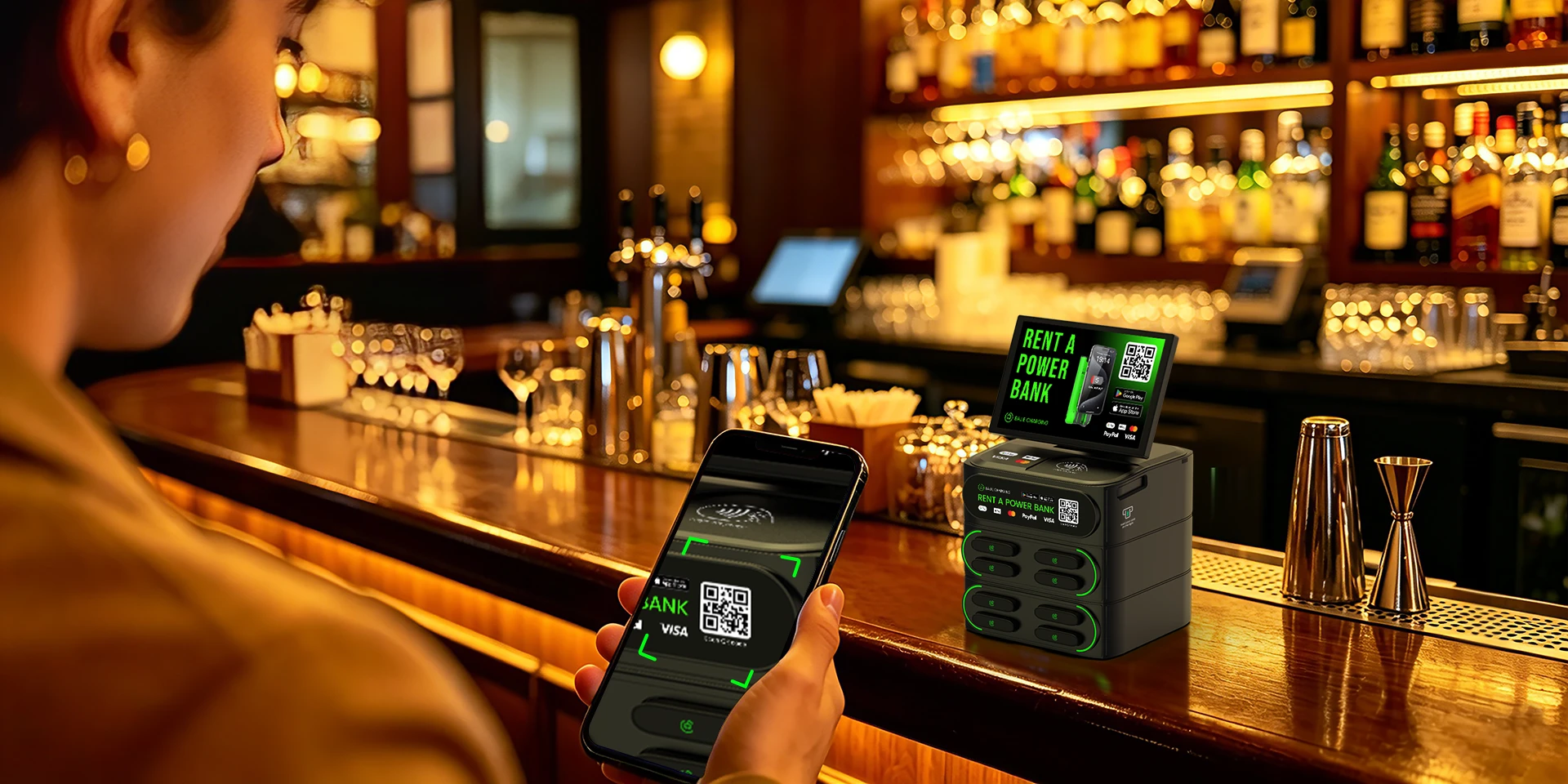
It is recommended to deploy 8-slot to 12-slot card-enabled charging stations equipped with payment terminals such as Stripe, Nayax, and PAX. Given the widespread adoption of mobile payments in the Netherlands, users should be able to rent power banks easily via:NFC payments (Apple Pay and Google Pay),QR code payments, Contactless card payments. This localized payment experience can significantly improve conversion rates.
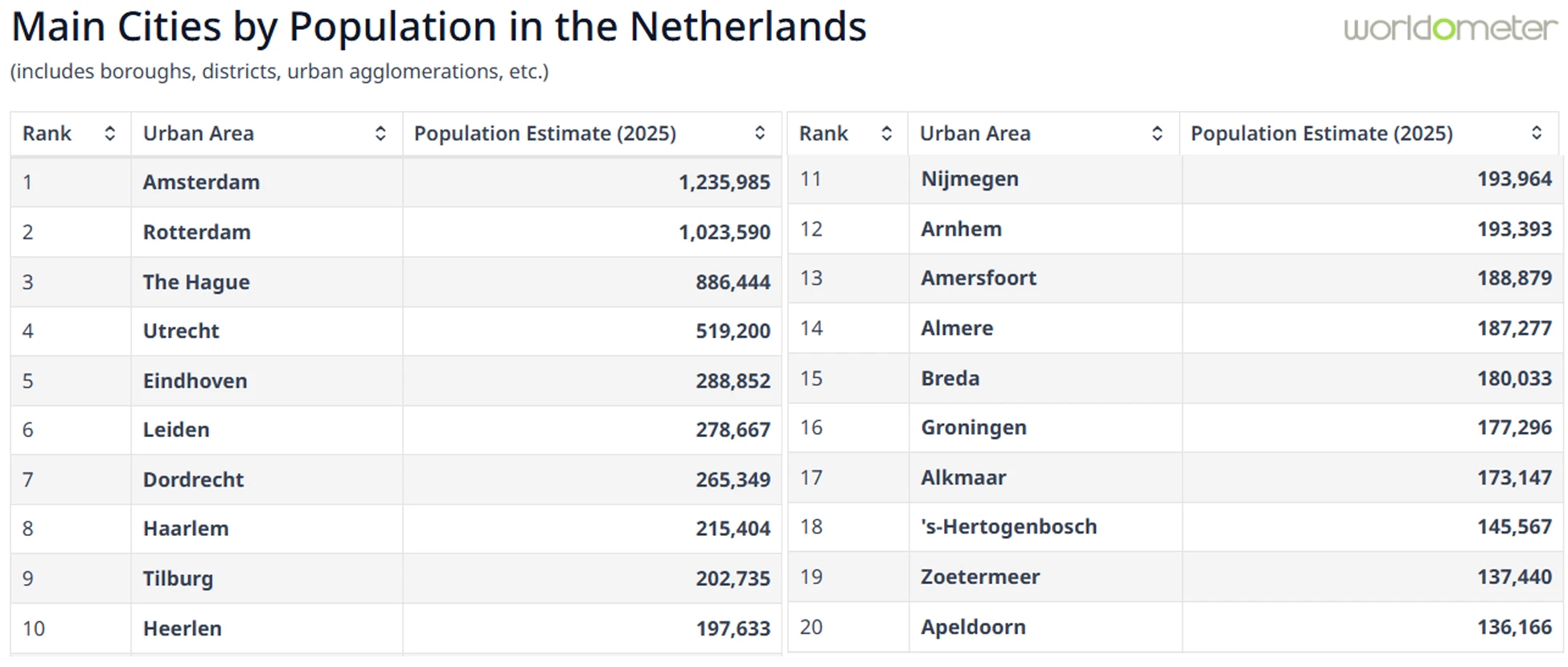
Prioritize Major Cities:Key cities such as:Amsterdam (1.236 million residents), Rotterdam (1.024 million residents),The Hague, Utrecht, Eindhoven,Leiden,have highly concentrated commercial districts, transportation hubs, universities, and tourist attractions.Operators should prioritize deployments in these cities to maximize user reach, collect operational data quickly, and continuously optimize their business strategy.
Ensure Tax Compliance Through Local Integration:A phone charging kiosk platform should support integration with local Dutch tax and e-invoicing systems such as:Storecove,B2Brouter. This enables automatic generation of compliant invoices and supports multiple VAT configurations to meet local tax requirements.
Real-time tax reporting capabilities allow transaction data to be synchronized automatically with tax authorities, helping operators reduce compliance risks and operate their power bank sharing business with confidence.
3. How to Calculate ROI for a Power Bank Station Rental Business in the Netherlands
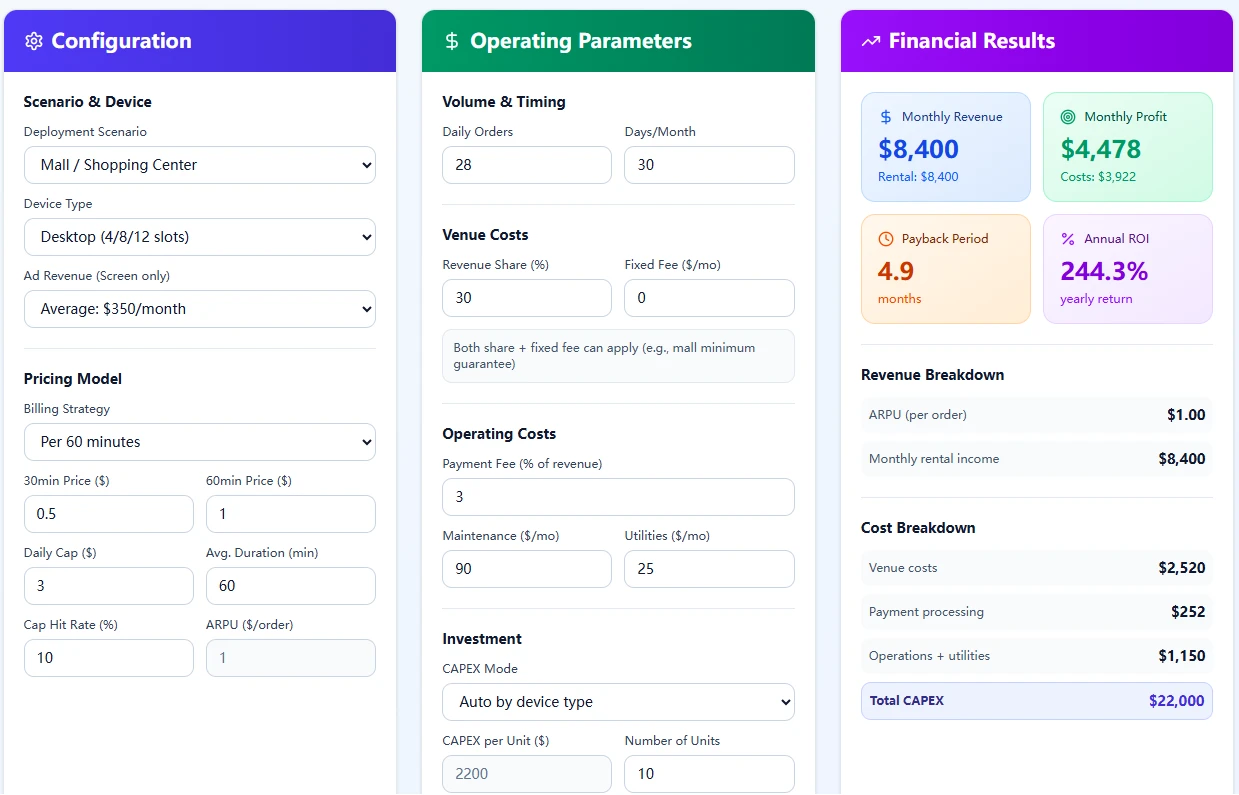
Assume an operator purchases 10 charging stations with 8 power banks each.Initial Investment (CAPEX)Including:Hardware costs,Shipping and customs duties, Installation materials. Total investment:10 stations × $2,200 per station = $22,000.
Monthly Rental Revenue Formula:Monthly Rental Revenue = Number of Devices × Daily Orders × Average Transaction Value × Days per Month
Assumptions:10 charging stations, 28 rentals per day, Average rental fee: $1, 30 days per month. Monthly rental revenue:10 × 28 × $1 × 30 = $8,400
Monthly Operating Costs:Venue commission (30%) $8,400 × 30% = $2,520 .Payment processing fees (3%), $8,400 × 3% = $252
Operations, maintenance, and utilities $1,150, Monthly Net Profit:$8,400 − $2,520 − $252 − $1,150= $4,478
Payback Period = Total Investment ÷ Monthly Net Profit. $22,000 ÷ $4,478≈ 4.91 months. Annual ROI ≈ 244.3%
Actual returns for a cell phone charging locker business will vary depending on the country, location quality, pricing strategy, and operating efficiency.
Bajie Charging can provide customized ROI calculators based on your target city and deployment plan.
In addition to rental income, charging stations for phones equipped with advertising displays can generate additional revenue through digital advertising campaigns.
Conclusion
The Netherlands has a large and growing internet user base, while public charging infrastructure remains relatively limited. As smartphone penetration continues to rise and mobile device usage becomes increasingly frequent, demand for convenient and secure charging solutions is growing rapidly.
The Dutch mobile phone charging locker market offers significant growth potential, driven by:High smartphone adoption, Strong tourism activity, Dense urban commercial districts, Increasing demand for mobile charging convenience.
By prioritizing tourist hotspots and high-traffic commercial locations, implementing localized payment and compliance solutions, and building a strong operational network, operators can establish a competitive advantage and capture a leading position in the rapidly growing Netherlands mobile charging station market.
May 30, 2026
 Which User Groups Are More Likely to Use Phone Charging Stations?
 How to Succeed in the Netherlands Phone Charging Station Market?
 How can a power bank portable charger SaaS cloud platform achieve intelligent management for millions of devices?
 How can fast-charging commercial power bank stations help operators attract more users?
 Why Are European and American Markets Accelerating the Deployment of Mobile Phone Charging Stations?
 What key indicators should you focus on when testing fast-charging power bank samples?